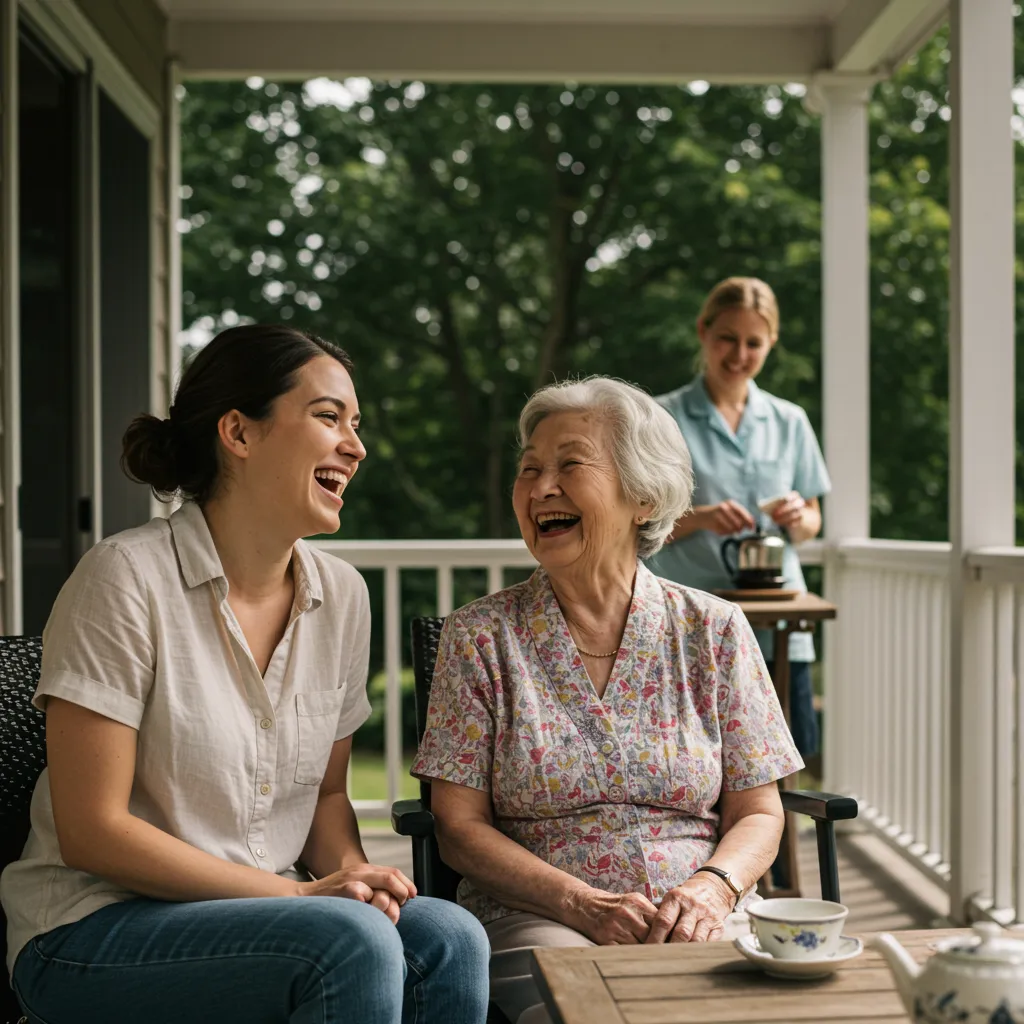
A Daughter’s Story: From Caregiver Burnout to Balance
For the first six months after my mother’s diagnosis, I thought I was being a "good daughter." To me, that meant doing everything myself. I was the one managing her insulin, scrubbing her floors, driving across Orlando for specialist appointments, and trying to maintain my own full-time career.
I thought I was a superhero. In reality, I was a ticking time bomb.
The Moment the Light Went Out
Burnout doesn't always look like a dramatic explosion. For me, it was a Tuesday morning when I realized I had been sitting in my driveway for twenty minutes, staring at the steering wheel, unable to move. I wasn't sad; I was just... empty.
I had reached the point where I was resentful of the woman I loved most in the world. Every time her "help" bell rang, I felt a flash of irritation instead of compassion. That was my wake-up call: My burnout wasn't just hurting me; it was hurting my mom.
Step 1: Admitting "I Can’t"
The hardest part of moving from burnout to balance was surrendering the idea that I had to be the sole provider of care. I had to learn that asking for help wasn't a sign of weakness—it was a logistical necessity.
What I did: I called a family meeting. I stopped saying "I'm fine" when my brother asked how things were going. I showed him the calendar and the medication logs.
The Result: We divided the "administrative" load. He took over the insurance paperwork and pharmacy runs from his home in Tampa, freeing up my physical time.
Step 2: The "Guilt-Free" Professional Intervention
The real turning point came when we hired a part-time home health aide. At first, I felt a crushing sense of guilt. Shouldn't I be the one helping her bathe? But then I saw the change in Mom. She actually preferred having a professional help with her personal care—it preserved her dignity and kept our relationship from becoming "clinical."
Step 3: Finding My "Non-Negotiables"
To regain my balance, I had to treat my own wellness like a doctor's appointment. I identified three things that made me feel human again:
A Saturday morning walk at Lake Eola, alone and without my phone.
A Tuesday night yoga class to stretch out the tension in my shoulders.
A daily "no-caregiving zone" from 8:00 PM to 9:00 PM where I read or watched a show.
To the Daughter Still in the Trenches
If you are currently where I was—feeling like you’re drowning in a sea of appointments and oxygen tanks—please hear this: You are doing enough. Balance isn't about doing everything perfectly; it's about realizing that you are a part of the care plan, too. If you break, the whole system collapses. By taking care of yourself, you are providing the best possible care for your parent.
Today, I still have hard days. But I’m no longer staring at steering wheels in the driveway. I’m present, I’m rested, and for the first time in a long time, I can enjoy a cup of tea with my mom without checking my watch.
